






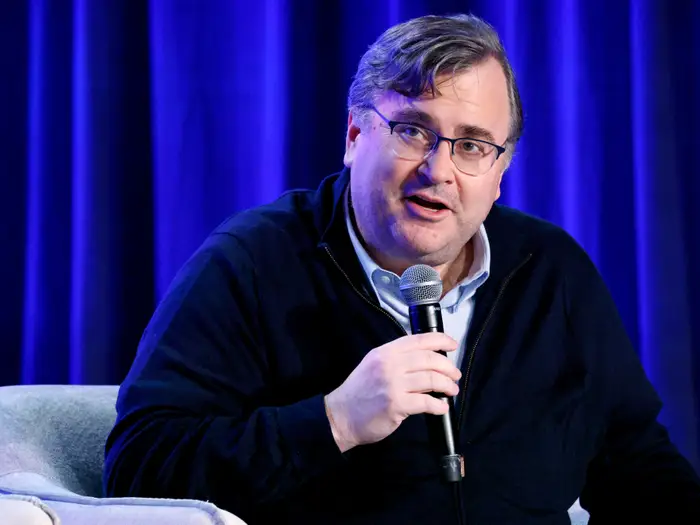
Ried Hoffman believes AI could reshape the labor market in a big way, just not the way many are imagining, with robots and algorithms replacing humans. He says idiomatic phrases like “white-collar bloodbath” give a wrong impression that the real pain will be shockingly mass unemployment, which is not so much his point as shifting long-term from pure human work to person + AI integration.
Why Reid Hoffman Thinks We Shouldn’t Fear the Hype About AI
“They’re stretching the truth, and trivializing public comprehension,” he says.
On Recode’s Rapid Response podcast, the LinkedIn cofounder argued that terms like “bloodbath” might be attention-grabbing but distort what’s occurring at a more fundamental level. AI will take over functions, he says — not entire industries.
The Excel analogy
- Excel took over tedious calculations.
- But accountants didn’t disappear.
- Instead, they became more strategic.
What Job Changes Does Hoffman Really Foresee?
Task-Level Automation
AI will displace tasks that are repetitive, menial, formulaic — any workflow with a clear structure or predictable layout.



But:
- Strategy
- Judgment
- Relationship-building
- Creative decision-making
…will remain human responsibilities.


Hybrid Roles
The future isn’t AI vs. humans, Hoffman says — it’s AI + humans.
“We have many years, if not decades, of person-plus-AI doing stuff,” he said.
This empowers human workers, much like software tools have scaled entire departments without eliminating them.
Does Hoffman Stand With Industry Leaders Predicting Massive Job Losses?
Not exactly.
Hoffman raised the issue directly with Dario Amodei, the Anthropic cofounder. And though they agree AI will transform work, Hoffman pushes back on claims of rapid white-collar displacement.
Industry pushback
Other executives — such as Nvidia CEO Jensen Huang — echo Hoffman’s skepticism, arguing that apocalyptic predictions tend to:
- Overstate short-term disruption
- Undervalues human adaptability
- Fuel unnecessary fear
Fear-based messaging might grab headlines, Hoffman says, but it doesn’t help workers prepare.
AI: How Do Workers and Employers Need to Adapt to It?
With strategy — not panic.
Hoffman emphasizes:
- Re-skilling as tasks get automated
- AI training for productivity and performance
- Reconceptualization of roles around higher-order human abilities
- Preparing for gradual change, not sudden upheaval
He views this era as an opportunity — where early movers can benefit most.
Why Hoffman’s View Matters
An intelligent counternarrative to AI panic
His perspective cuts through viral fear narratives and reframes AI not as catastrophic but evolutionary.
A blueprint for adaptation
Workers can focus on skills AI cannot replicate:
- Creativity
- Leadership
- Emotional intelligence
A human–machine partnership future
AI will handle repetitive work, freeing humans to be more creative, strategic, and purposeful — redefining the future of work as collaboration rather than substitution.