
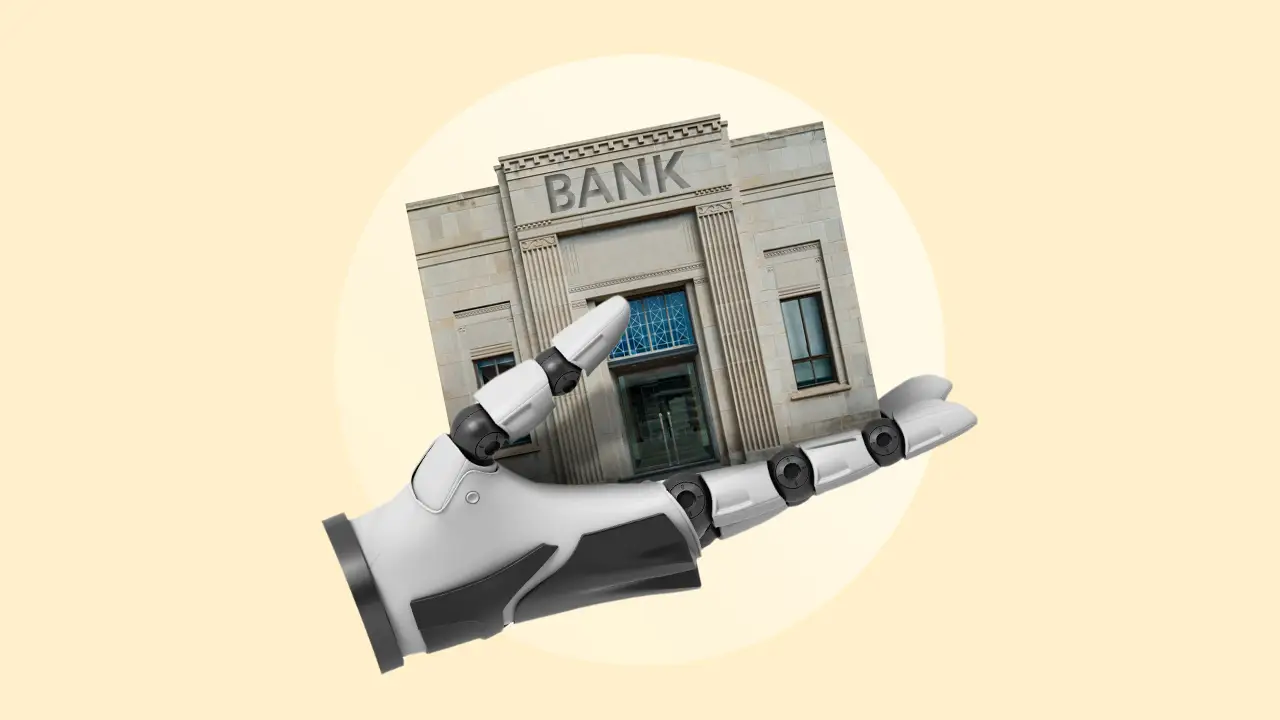

Image Quite simply, the banking world is in a state of profound change — and artificial intelligence has become the fulcrum. Previously confined to back-office automation and fraud prevention, by 2024 AI is now reimagining everything from customer service to investment decision-making, loan approvals and even regulatory compliance.
But what’s in it for regular users, workers and the future of financial institutions? As the industry quickly embraces machine learning and large language models, one thing is certain: Banking will never look the same.
The AI Revolution in Banking: Hype Vs Reality
Banks have traditionally been slow to adopt the latest tech, wary of regulation and consumer confidence. But as generative AI and sophisticated analytics tools developed, the industry could no longer stand on the sidelines.
Now, not only is AI a buzzword but it’s also a strategic priority. Banks are infusing AI in virtually every aspect of their business.
Here is what that practice looks like:
Generative AI Improving Customer Service With Brains
The days of robotic, clunky chatbots are long gone. With big language models (BLMs) like the ones powering ChatGPT now, banks are able to personalize customer service in a way that’s more conversational and supportive for clients.
Whether it is providing answers to questions about credit card fees, helping start a mortgage application or identifying suspicious transactions, AI-powered agents are available 24/7 fielding the equivalent of thousands of queries without growing tired or making more than the odd human error.
Some banks are going with voice AI, allowing customers to talk conversationally with virtual agents that gradually begin to understand what they like.
AI-Driven Lending: Fairer or Riskier?
AI is also upending the way that loans and lines of credit are evaluated. In the past, loans depended on strict methods around income, credit score and financial history. Now, the levers that machine learning models can pull include dozens of real-time factors — from transaction patterns to market data — for a more nuanced risk profile.
For borrowers, it could lead to faster approvals and a wider range of loan products. But the change is not without its worries. Critics are concerned about algorithmic bias, especially in lending decisions that can inadvertently reflect historical discrimination — or biased data sets.
That’s why regulatory watchdogs are paying close attention as more banks adopt AI underwriting models.
Real Time Fraud Detection and Security in Cyberspace
AI’s role in the banking industry: Fraud prevention Among its most obvious victories is when it comes to fraud prevention. Because AI systems sift through millions of transactions in real time, they can flag anomalies far faster than traditional tools.
From odd ATM withdrawals to weird logins on a website, AI systems quickly alert banks of potential threats - in many cases they’ve prevented fraud before it affected the customer. Banks have also started to layer on AI with biometrics, such as facial recognition and voice authentication, enhancing security without adding friction for users.
AI in Asset and Investment Management
Banks and financial planners are turning to AI, too, to tailor investment plans. Whether with robo-advisors or AI-enhanced portfolio managers, customers are now given advice based on dynamic and data-driven factors, which change with market developments.
AI also follows behavior, goals and economic trends to help banks recommend better products — even automate tax strategies or retirement contributions.
This change doesn’t supplant human advisers, but gives them superpowers — empowering more efficient, scalable and accurate financial planning.
Complicance and Risk Management: AI the Watchdog
With thousands of pages of financial regulation that are a never-ending work-in-progress, banks are using robots to comb through reams of data in search of compliance risks and potential red flags.
This alleviates compliance officers, minimizes potential for human error, and enhances transparency with regulators. AI is even being employed to simulate stress tests, assisting banks in predicting how they would fare in various economic scenarios.
Ethical Concerns and Future Challenges
But AI in banking is not without its own set of challenges, despite the promise. However, issues regarding data privacy, transparency and accountability persist. And regulators are scrambling to stay ahead of the pace of innovation, while banks have to be wary that automation doesn’t degrade the trust customers put in them.
And then there’s that whole question of job displacement. Even as AI is generating new jobs in tech and data science, it could simultaneously eliminate certain administrative positions.
Banks have to be able to maintain the efficiency of their operations while also operating with empathy as they factor in a digital future that ATM keyboard ordering can’t put on mute.
A Smarter, Faster, Fairer Future for Finance?
AI is propelling banks toward a smarter, more accessible and — ideally at least — more equitable future. With the proper safeguards, A.I. has the potential to usher in an age of financial inclusion — one where more people are able to access loans, increase their wealth and secure what little they have.
But that future will rely on the technology being used responsibly. Transparency, ethical oversight and careful design will be necessary when banks reach this technological crossroads.
Meanwhile, brace yourself for your next banking experience to be less bureaucratic and more like having a financial assistant that never sleeps.