






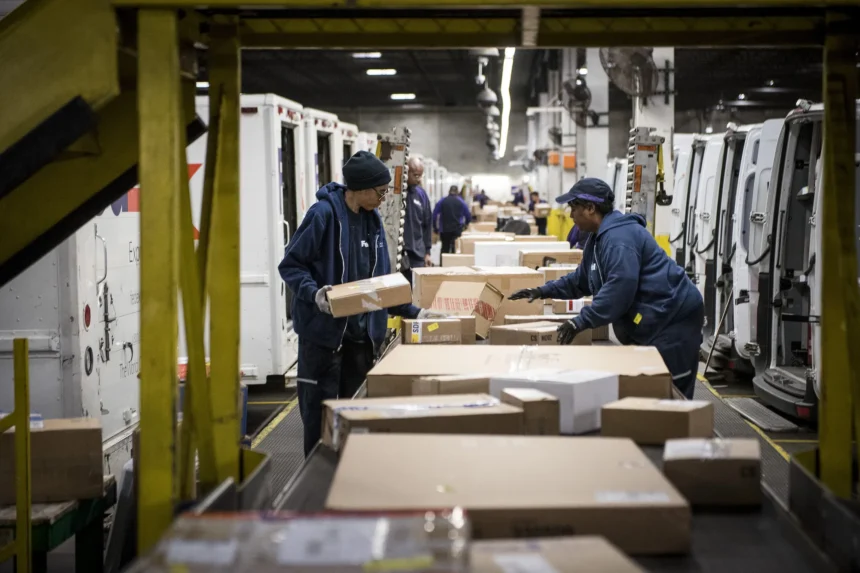
New labor, inflation, and trade data indicate the U.S. economy is slowing — not falling into a recession. The labor market is losing momentum, jobless claims are on the rise, inflation remains stubborn, and new tariffs are compounding the Federal Reserve’s challenges. All this together suggests a cooling but sturdy economy heading into 2025.
Is the Labor Market Slowing Down?
Yes — but gradually.
The latest jobs report indicates that the labor market is still adding jobs, but beneath the topline numbers, there’s a clear downshift.
What do the hiring figures actually tell us?
The United States added 139,000 jobs in May, just above expectations. But behind the headline figure, weakness isn’t hard to find:
Read next


- March and April were revised downward by almost 95,000 jobs.
- The May reading, economists predict, may also be revised down closer to ~100,000.
- Claims for jobless benefits climbed to about 245,000, the highest in eight months.
- Announcements of layoffs have risen across tech, retail, transportation, and the industrial sector.
The trend amounted to “a meaningful cooling beneath the surface,” in the words of Samuel Tombs, chief United Kingdom economist at Oxford Economics.
Why do revisions matter?
Their revisions indicate whether economic momentum is speeding up or slowing down.



Declines from one month to the next are often a sign that employers are:
- Delaying new hires
- Cutting hours
- Slowing backfills
Becoming more cautious about expansion
It mirrors what business surveys indicate: hiring intentions are at their lowest since mid-2020.
Is Unemployment Still Low?
Yes — but it’s increasingly not very meaningful.


The unemployment rate remains stable at around 4.2%, a historically low level. But a few deeper signals are flashing red:
- Quit rate is declining, which could indicate that fewer workers feel secure enough to change jobs.
- Job openings have flattened out, no longer pointing to a tight labor-shortage environment.
- Small-business hiring plans rose to a level not seen since May 2020, NFIB said.
- Wages are up 0.3%–0.4% a month, much slower than in 2022-23.”
What does this mean for labor?
Workers retain some options, but the balance of bargaining power is shifting.
Employers are no longer providing outsize salary bumps, signing bonuses, or on-the-spot hiring offers as they did during the post-pandemic boom.
Is Inflation Finally Cooling?
Not as fast as the Fed wants.
Core CPI most recently ticked up to 2.8% year-over-year, stubbornly above the Fed’s official target of 2%.
Why is inflation still sticky?
Economists point to:
- Fresh rounds of tariffs on China, Europe, and emerging markets
- Rising shipping costs sparked by world tensions
- Lagged shelter inflation
- Energy-market volatility
Those factors have helped to keep goods and services prices elevated even as the pace of economic activity has slowed.
Is the U.S. on a Path to Stagflation?
A mild version of it — yes.
Analysts have described the current environment as “stagflation-lite”:
- Growth is slowing
- Inflation remains above target
- Hiring is losing steam
This is not 1970s-style stagflation, but it does make it awkward for the Fed to cut rates quickly.
How is the Fed responding?
The Federal Reserve has kept rates flat at 4.25%–4.50%.
It still predicts two rate cuts later in 2025, but Chair Jerome H. Powell has repeatedly cautioned that:
- Inflation progress has stalled
- The job market is slowing more quickly than expected
- Risks were “more balanced” between inflation and unemployment
The Fed forecasts 2025 inflation of roughly 3% and unemployment close to 4.5%.
Which Companies Are Affected by the Trade War?
They are putting pressure on inflation and causing some uncertainty.
So what was the story behind the latest tariff moves?
The U.S. levied another round of tariffs between February and June:
- 10% blanket tariffs on a broad selection of products
- More tariffs on steel, chips, EVs, solar equipment, and consumer electronics
- In some categories, tariffs jumped twofold or more.
Imports spiked at first as companies hurried to order before tariffs were imposed — then fell off a cliff.
What are the consequences?
Economists say the volatility has:
- Increased supply-chain costs
- Discouraged new business investment
- Slowed housing starts
- Reduced hiring in trade-exposed sectors
The Fed has cited tariff uncertainty as a significant economic headwind in its most recent Beige Book summaries.
Why Is All This Important Today?
Because the economy is at an inflection point.
The mix of labor-market cooling, sticky inflation , and tariff-driven uncertainty adds up to:
- Job growth is slowing — downward revisions and elevated claims are evidence.
- Inflation stubbornly sticks around, in part because of trade policy.
- Companies are wary, slowing down hiring and expansion.
- It is easy to forget that the Fed remains in wait-and-see mode, reluctant to make cuts until they become absolutely necessary.
In short, the U.S. is not in crisis, but there’s a rough road ahead — and the margin for policy error is slowly vanishing.